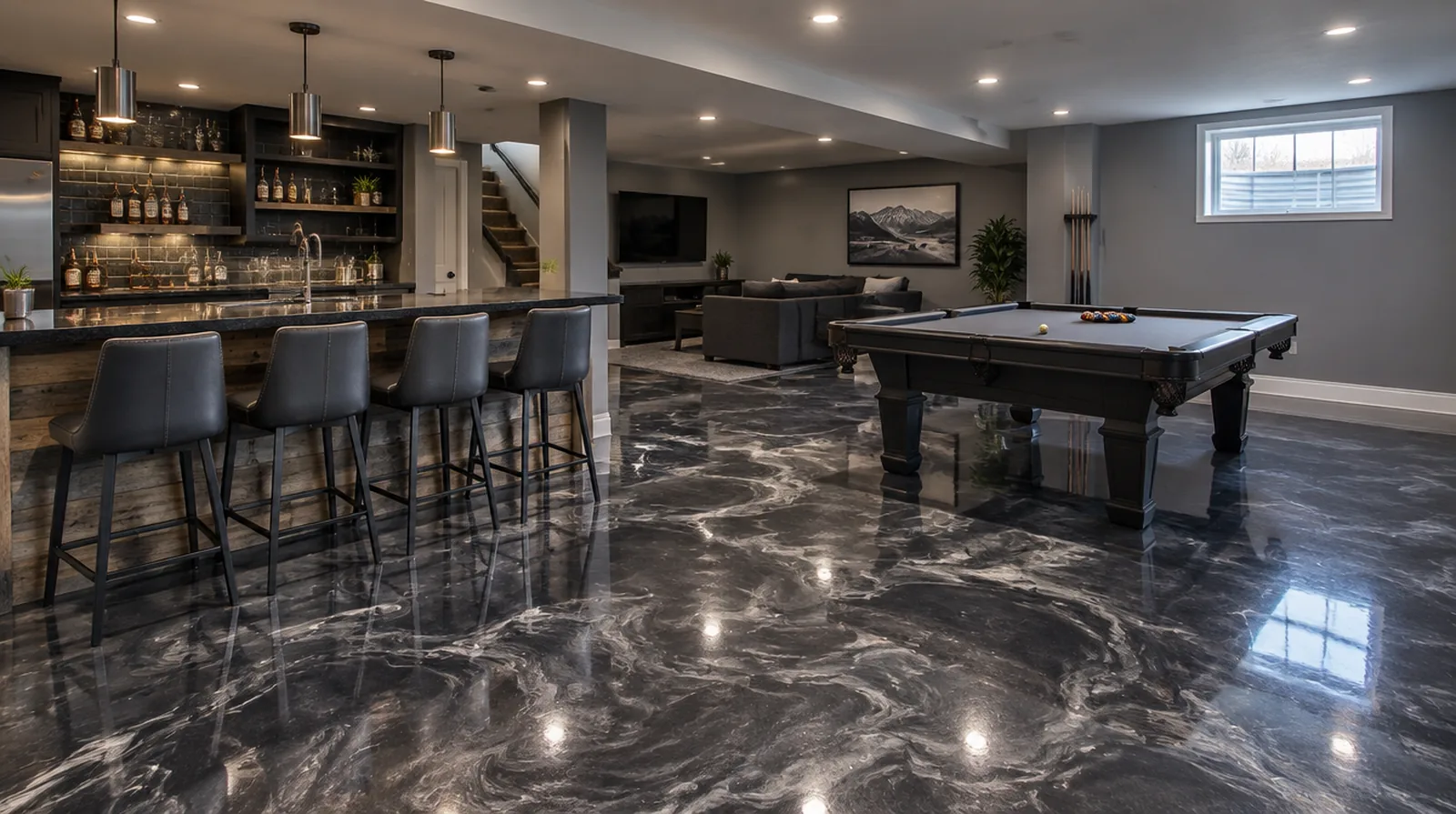
What metallic epoxy is
Metallic floors use clear epoxy mixed with fine reflective pigments. As we spread and manipulate the resin, the pigments settle and swirl, creating patterns that resemble polished stone, lava, water or clouds. Light catches the pigment differently from every angle, so the floor seems to move as you walk across it. No two floors are the same.
Basements are the perfect canvas
Many local homes have basements that started as storage and are becoming rec rooms, home theaters, gyms and bars. Carpet in a basement can trap moisture and smell. Laminate can swell. A metallic epoxy floor is seamless and waterproof on the surface, easy to clean and dramatic enough to make the basement the favorite room in the house.
Moisture first
Basement slabs are in contact with soil, and vapor can push up through them. Before any decorative pour, we test moisture. If readings are high, we install a moisture-mitigation primer. Skipping this step is the leading cause of blistering on basement coatings.
The installation
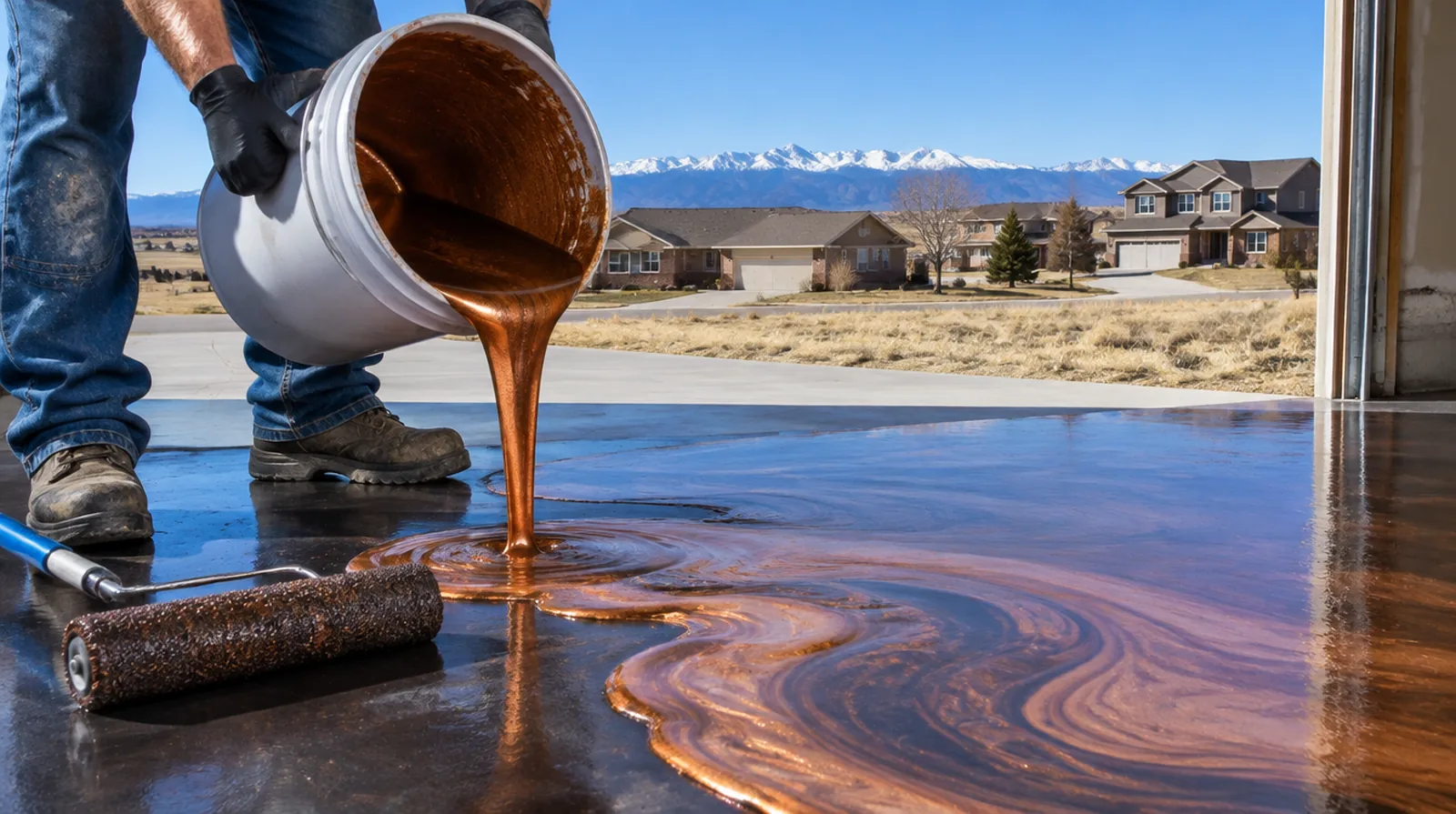
We grind and repair the slab, then prime it. A pigmented base coat sets the background color. The metallic layer goes on next, poured and spread with rollers, brushes, trowels or air blowers depending on the look you want. We work quickly while the resin is fluid. A clear topcoat then adds abrasion resistance. Most metallic floors take two to three days.
Popular looks
- Charcoal and silver: modern and dramatic, great with gray walls.
- Copper and bronze: warm and inviting, ideal for bars.
- White and pearl: bright, marble-like, makes basements feel bigger.
- Blue and teal: water-like movement for game rooms.
Lighting matters
Basements often rely on recessed lighting. Warm bulbs bring out copper and gold; cool bulbs make silver and blue pop. Egress windows add natural light that shifts through the day. We consider your lighting when planning colors and technique.
Commercial uses
Showrooms, salons, boutiques and offices use metallic floors to make an impression. With a durable urethane topcoat, they stand up to steady foot traffic.
Durability and care
Metallic epoxy is tough, but glossy finishes show scratches more than textured ones. Use felt pads under furniture and mats at entries. A satin topcoat reduces visible wear. Clean with a microfiber mop and pH-neutral cleaner.
Questions
Can I see my design before you pour?
We bring sample boards and photos, and we can do a small test area. Because the material is hand-worked, the final floor will be unique.
Is metallic good for a garage?
It can be, with a UV-stable topcoat and added texture. Flake is usually more practical for daily parking.
Will it feel cold?
Like any hard floor, it feels cool. Area rugs or radiant heat help in winter.
Design your floor
Contact us to see samples and plan your basement.
Home gyms and studios
Basement and garage gyms are increasingly common, and a metallic floor can make a workout space feel premium. We add a slightly thicker body coat for impact resistance and place rubber mats in lifting zones to protect the finish. Dance and yoga studios use metallic floors for their reflective, open feel, often with a satin topcoat to reduce glare under bright lights.
Before the pour, we review the layout with you: where seams between rooms will fall, how stairs and thresholds will be finished and where furniture will sit, so the most striking movement in the pattern lands where it will be seen.
Start your metallic floor
Call (720) 915-4315 for a free estimate.