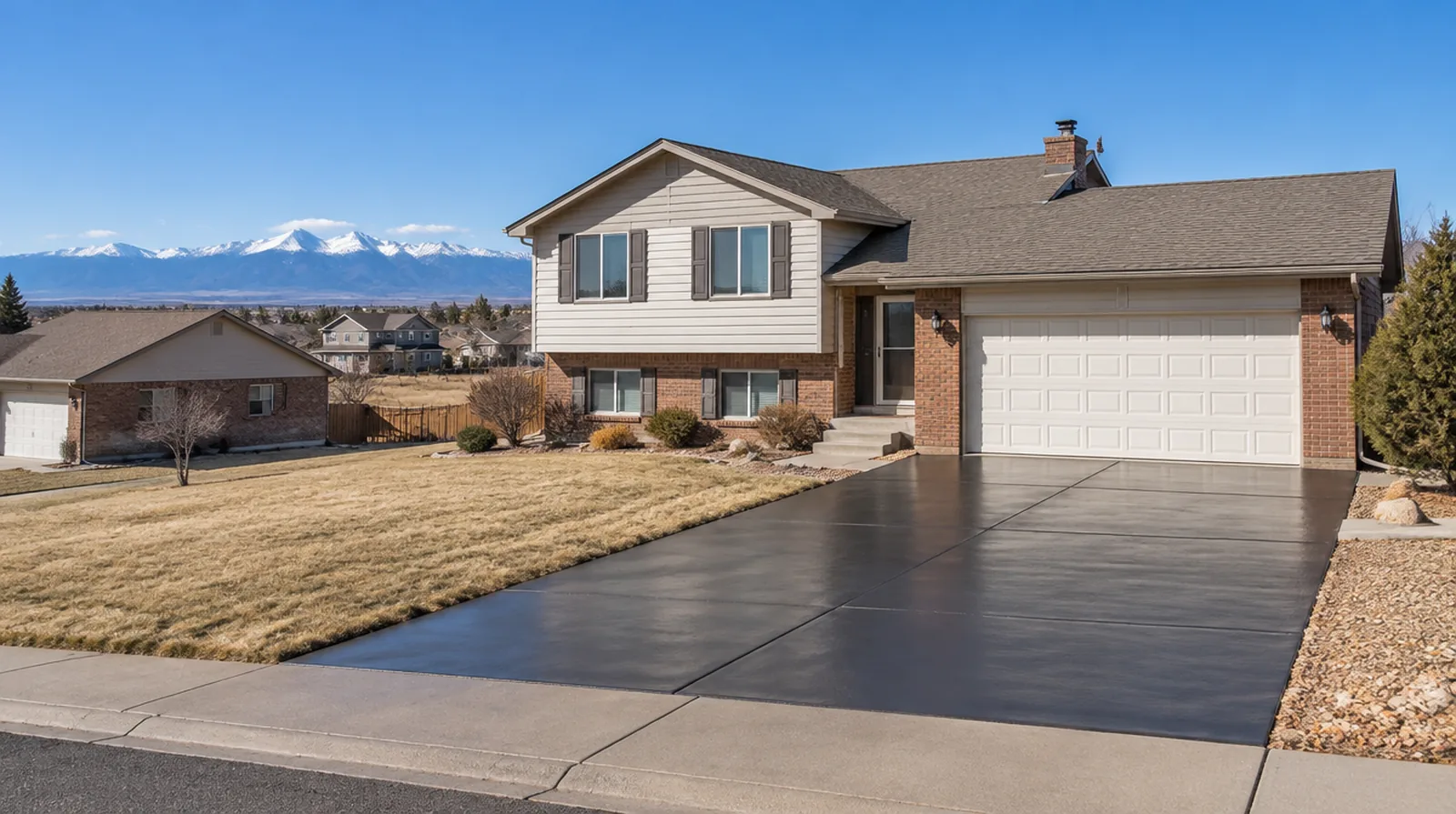
Why scaling happens
Scaling is the flaking of the top layer of concrete, and it is everywhere on local driveways and sidewalks. Water soaks into the surface, freezes and expands. De-icing chemicals make it worse by increasing the number of freeze-thaw cycles and drawing more water into the concrete. New concrete is especially vulnerable during its first winters. Sealing reduces how much water and salt can enter, which dramatically slows scaling.
Penetrating sealers
For driveways, sidewalks and porches, we usually recommend silane or siloxane penetrating sealers. They soak into the concrete and line the pores with a water-repellent barrier. The surface looks natural, stays breathable and keeps its traction. These are the sealers most transportation departments use on bridges and roads.
Film-forming sealers
Acrylic and urethane sealers form a thin film on top. They enhance color and add sheen, making them popular on stamped and colored patios. Outdoors in freeze-thaw climates, they need more maintenance and can become slippery, so we add grit and use them selectively.
Cleaning comes first
We pressure wash with hot water, remove oil and rust stains, and treat efflorescence. The concrete must dry fully before sealing. Cracks are filled with flexible sealant so water does not get under the slab.
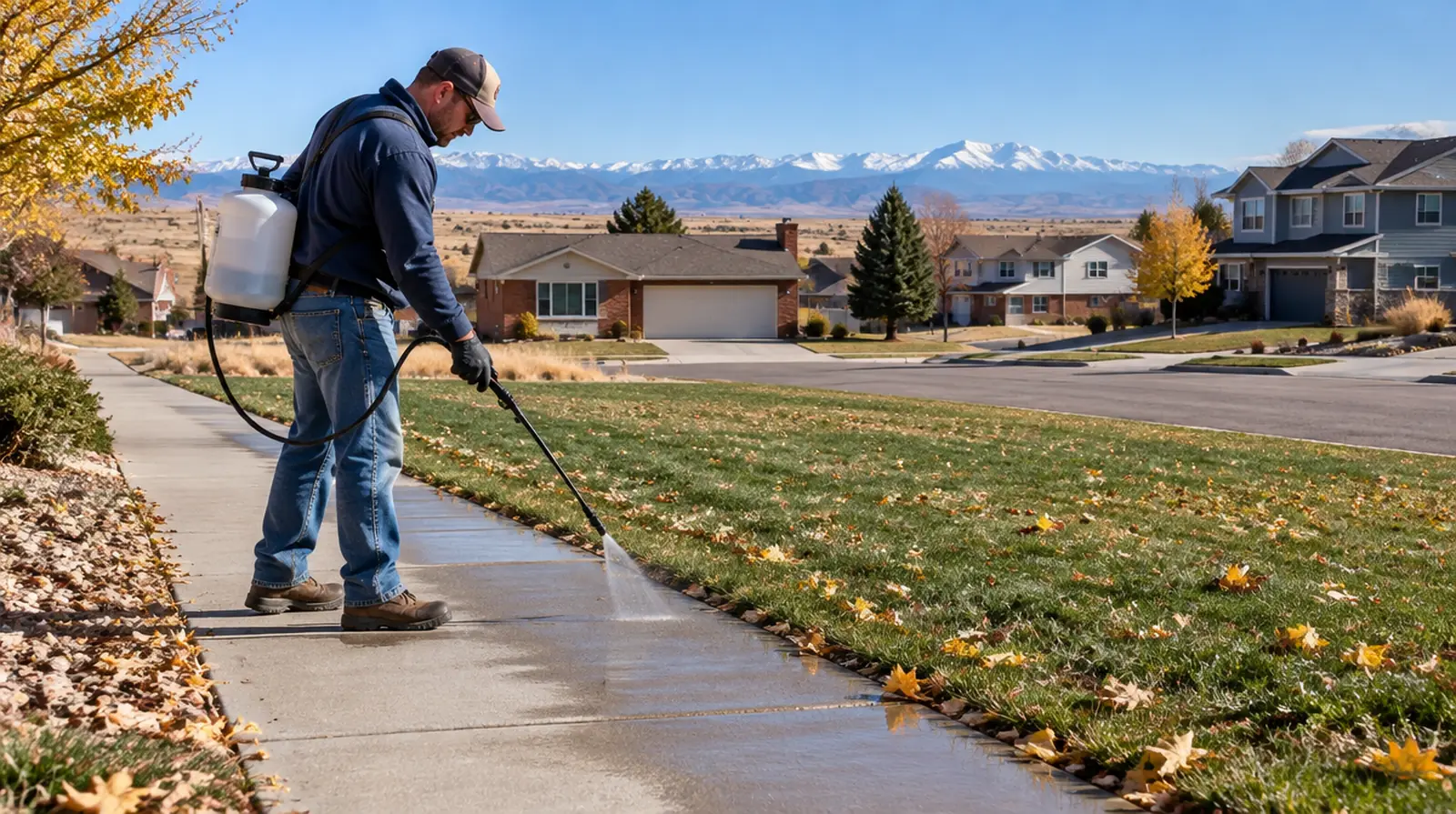
Timing
The best time to seal is late summer or early fall, before the first freeze and after the concrete has dried from summer storms. New concrete should cure about 28 days first. Spring sealing is also fine once temperatures stay above 40 to 50 degrees.
New concrete
If you just poured a driveway, sealing before its first winter is one of the best investments you can make. Fresh concrete is most susceptible to salt scaling. We also advise skipping chemical de-icers that first winter and using sand for traction instead.
Patios and pool decks
Backyard patios and pool decks see sun, sprinklers and spills. Sealing reduces staining, slows fading of colored concrete and keeps surfaces easier to clean.
Commercial sealing
Storefront walks, loading docks and parking structures benefit from sealing. Reduced scaling means fewer trip hazards and lower repair costs.
Resealing
Penetrating sealers typically last five to ten years. Film-forming sealers usually need recoating every two to three years. A simple water test shows when it is time: if water darkens the concrete quickly, reseal.
Questions
Will sealing stop all scaling?
It greatly reduces it but cannot fix concrete that was poorly finished or air-entrained.
Can you seal already-scaled concrete?
Yes, to slow further damage. For badly scaled surfaces, consider a driveway coating.
When can I drive on it?
Usually within 24 hours.
Seal before winter
Request a free estimate for your driveway, walks or patio.
De-icer choices matter
Sealing helps, but what you put on the concrete in winter matters just as much. Magnesium chloride and ammonium-based products are hardest on concrete. Sodium chloride rock salt is less aggressive but still causes scaling on young or unsealed slabs. Sand or kitty litter adds traction without chemical damage. Shoveling promptly so snow does not get packed into ice reduces how much de-icer you need in the first place. Remember too that the brine dripping off your car from city streets lands on your driveway regardless of what you spread, which is one more reason a good sealer pays off over the years.
Garage aprons
The concrete apron just outside the garage door takes the heaviest dose of dripping brine. Even if you coat the garage interior, sealing the apron and the first few feet of the driveway protects the area that scales first. We often bundle this with interior projects at little extra cost.
Get a sealing quote
Call (720) 915-4315 for a free estimate.